NewsColony
SARS-CoV-2 found in semen of COVID-19 patients
Since the novel coronavirus, now called the severe acute respiratory syndrome coronavirus 2 (SARS-CoV-2), emerged in December 2019, viral loads have been detected in body fluids, such as urine samples, saliva, stool samples, and in the gastrointestinal tract. Now, a new study reveals the SARS-CoV-2 virus in semen.
The researchers from the Nanlou Respiratory Diseases Department, Chinese People’s Liberation Army General Hospital, Beijing, China have found that SARS-CoV-2 can be present in the semen of patients with COVID-19, and it can still be detected in patients who have already recovered from the illness.
Semen testing
In the study, published in the JAMA Network, the researchers identified all male patients who are older than 15 years old between Jan. 26 and Feb. 16 in Shangqui Municipal Hospital, the only hospital catering to COVID-19 in Shangqiu, Henan Province. The patients were asked to provide semen samples for analysis by real-time reverse transcriptase-polymerase chain reaction (RT-PCR) assay.
Of the 38 patients who provided semen samples, 23 had recovered, and 15 were are at the acute stage of the illness. The semen testing results showed that six had positive results for SARS-CoV-2, including four who were at the acute stage of the disease.
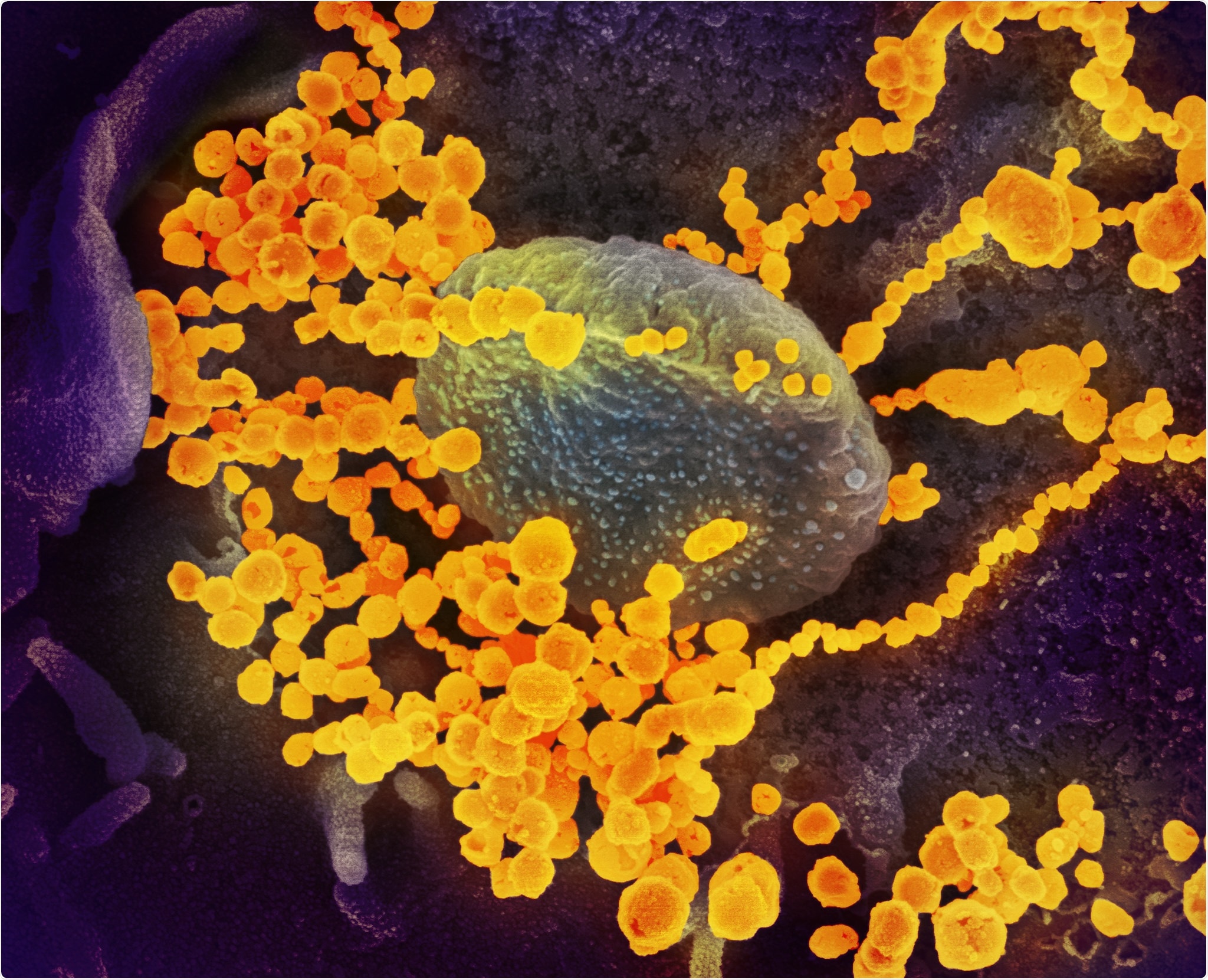
Novel Coronavirus SARS-CoV-2: This scanning electron microscope image shows SARS-CoV-2 (round gold objects) emerging from the surface of cells cultured in the lab. SARS-CoV-2, also known as 2019-nCoV, is the virus that causes COVID-19. The virus shown was isolated from a patient in the U.S. Credit: NIAID-RML
Seeding into the male reproductive tract
The exact mechanism of how the virus gets into the testes is still unclear. The researchers suggest that the presence of systemic local inflammation may pave the way for the virus to seed into the male reproductive tract, due to imperfect blood-testes/deferens/epididymis barriers.
Related Stories
The team points out, however, that even if the virus cannot replicate in the male reproductive system, it may persist, possibly resulting from the privileged immunity of testes. Further studies are needed to make sure that the virus cannot be spread sexually. If it could be proven that the virus can be transmitted sexually, the sexual transmission may be an essential part of transmission prevention. This is particularly alarming if true since recovered patients have shown the presence of the coronavirus in their semen.
“Studies on viral detection and semen persistence are beneficial to clinical practice and public health, especially concerning viruses that could cause high mortality or morbidity, such as SARS-CoV-2. This study is limited by the small sample size and the short subsequent follow-up. Therefore, further studies are required concerning the detailed information about virus shedding, survival time, and concentration in semen,” the researchers wrote in the paper.
Not sexually transmitted
In another study, published in the journal Fertility and Sterility, a team of researchers found that the coronavirus is not sexually transmitted. However, the study does not entirely rule out the possibility.
The team from the University of Utah and Huazhong University of Science and Technology in China analyzed semen samples from 34 Chinese men one month after being tested positive for COVID-19. But in the study, the virus could not be detected in semen samples, unlike the current study wherein the pathogen was found in semen.
It is important to determine if the viral infection is sexually transmitted to determine the risk, especially that men who recovered may still harbor the virus. Though the scientists show that the virus may not spread sexually, there is still a possibility.
The coronavirus disease is seen more in men than in women, also in older adults than in children. Globally, COVID-19 has spread to more than 187 countries and territories, infecting more than 3.84 million people across the globe. More than 269,000 have died, while about 1.2 million have already recovered.
The United States reported the highest number of cases, with 1.25 million infections, and at last, 75,000 people have died from the disease. Europe has the most countries with high infection rates. Spain has a total of 221,447 confirmed cases, followed by Italy with more than 215,858 infections.
The United Kingdom has more than 207,000 confirmed cases, with a higher fatality rate for the 30,689 reported deaths. The other countries include France with at least 174,000 cases, Russia, with more than 177,000 cases, and Germany with more than 169,000 cases.
Journal reference:
Source: | Medical News
Source: Sound Health and Lasting Wealth
The post SARS-CoV-2 found in semen of COVID-19 patients appeared first on NewsColony.
NewsColony
from WordPress https://ift.tt/2Wzd4ja
Comments
Post a Comment